Druga
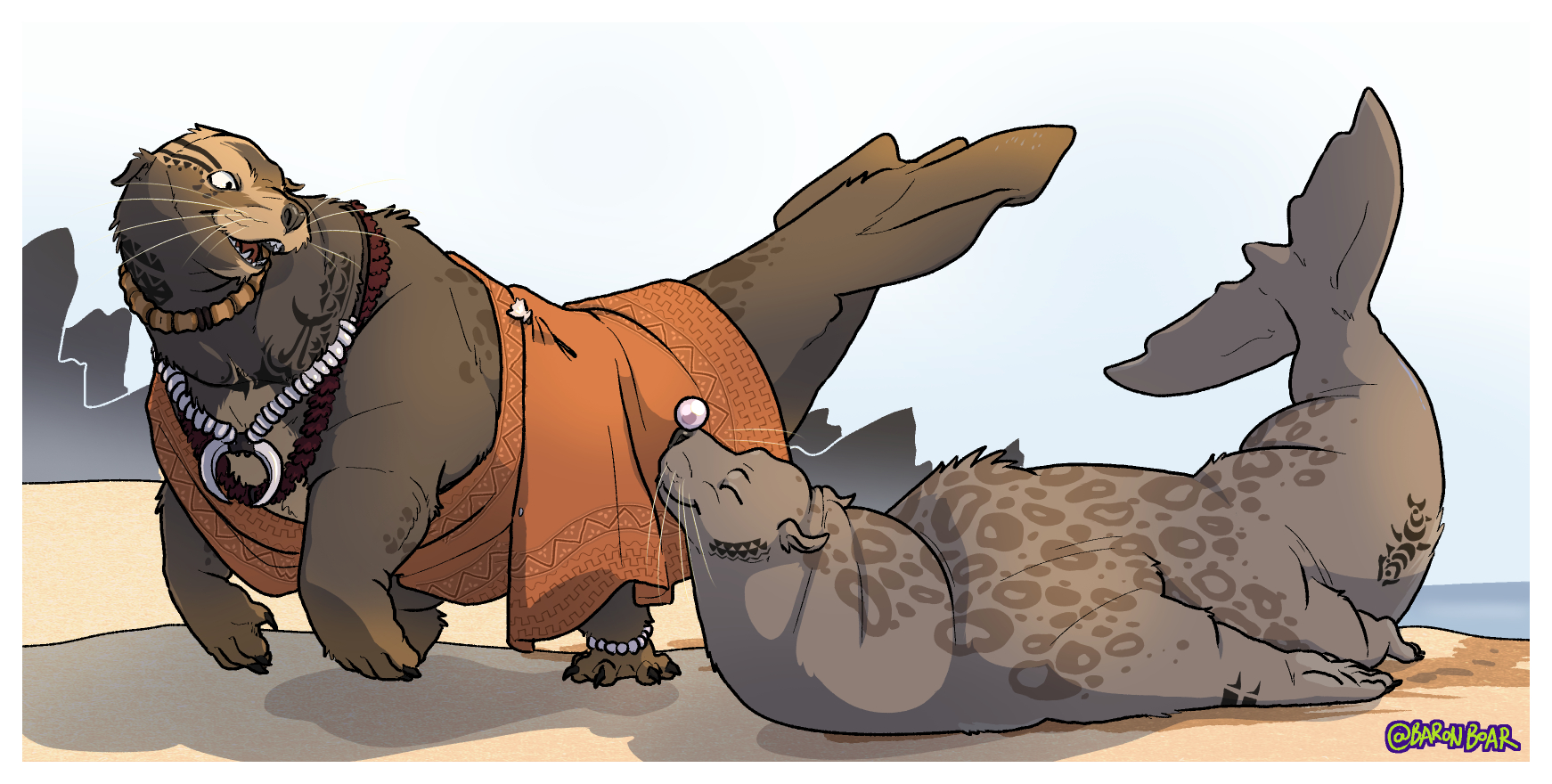
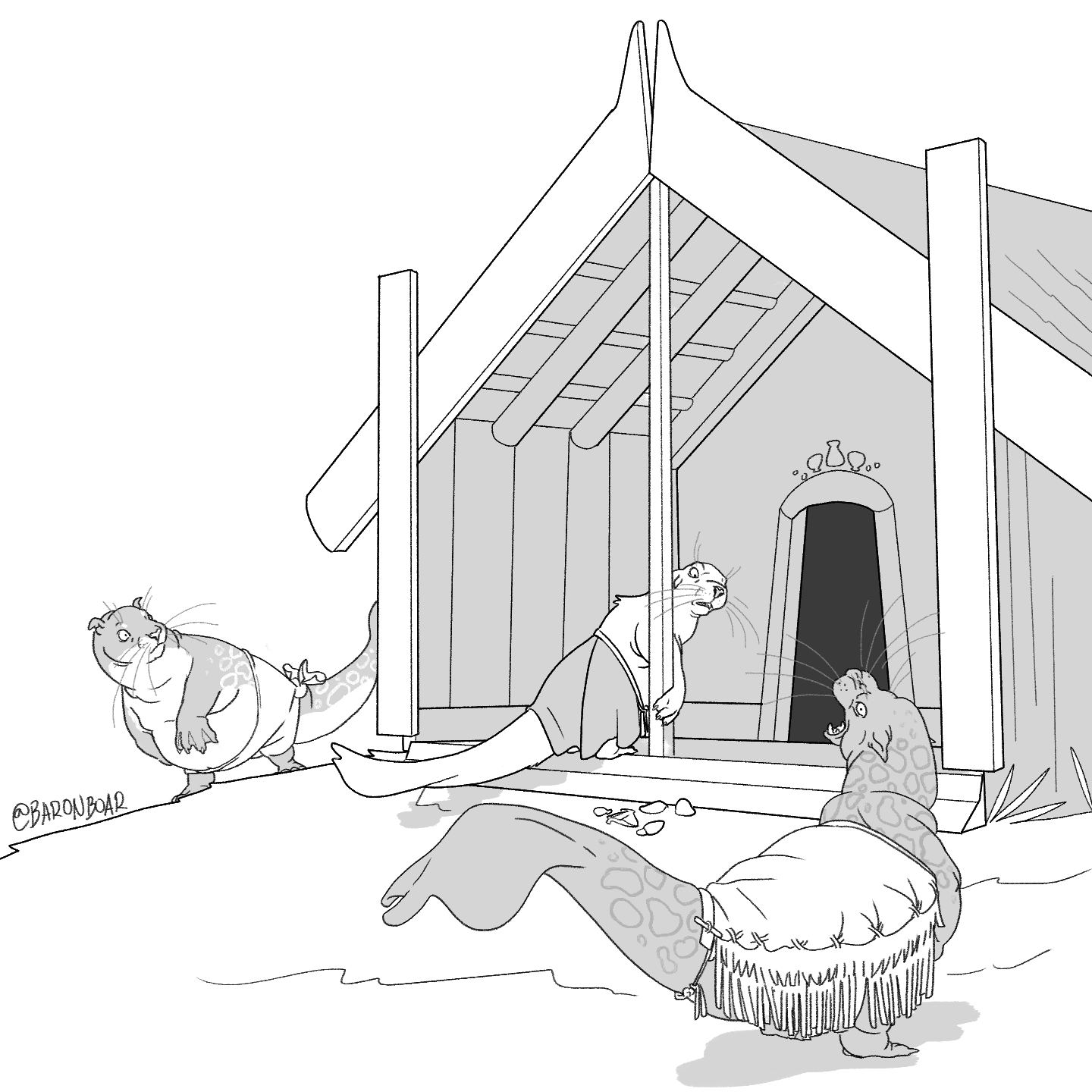
In the furthest reaches of the North, allied with the Lecha who quiver in those cold lands, are the Druga. These pack beasts primarily inhabit the Quqpngur Gulf and the coasts beyond and are uniquely a people who sustain themselves off of the bounteous ocean. The Druga are stout with wide, with heavily whiskered faces, large eyes, waterproof fur, and flipper-like paws. Those who live further south in the capital of Paka-Kokiri have smaller, sleek bodies and small ears, while the roving tribes to the North have fatter bodies with thick fur to combat the deeper cold that they face, especially while hunting whales and sharks in the cold dark waters there. Most Druga have slate grey bodies, but some can appear blue, brown, black or have ring spots. Despite the challenges of their environment most of these people choose not to wear clothing in their homeland aside from ornamental pieces. As they spend much of their time swimming fabrics would simply be a burden and are reserved for public servants as a symbol that they are not preoccupied with a hunt and may assist on land in matters of education, organisation, coaching or record keeping.
Instead of clothes to show status as Druga have short hollow fur they will adorn themselves with tattoos. These pieces of art are worn to show achievements and mark times of personal growth. In most cases a tattoo on the head will represent knowledge, on the neck it marks wisdom, the arms show deeds of prowess in hunting, the tail represents speed or bravery and the legs can mark success in wrestling. As for the torso, only the greatest badges of honor are shown, these tattoos mark the felling of great whales, sharks, sea serpents, and success in elections. The artists who create these tattoos are highly respected, most of them act as priests as well, communing with nature and their client's spirit to depict the trials that they faced to earn these markings. When it comes to belief, the Druga do not build temples to a specific deity, but instead believe that the ocean itself is inhabited by many devious spirits that must be out-tricked or shown respect so that their packs may successfully hunt.
The leader of a Druga community is always decided by combat. But the winner does not rule alone. As equally respected as a wrestling champion is their Rista, a coach that acts as a spiritual and mental advisor. The Rista is a role of great wisdom, someone with the insight to break down every opponent and see the path to victory in every form that takes. Alongside a strong wrestler this is an unstoppable team. These matches are competitions of endurance and stability where two Druga must compete to remove the other from the arena, or alternatively flip the opponent onto their back. Historically the Druga have been reluctant to interact with other people. As they see respect as something earned through either being a good pack hunter or a proficient wrestling team other people have rarely impressed these beasts. But the Druga of the largest settlement, Paka-Kokiri, have come to accept outsiders for trade and enjoy the songs and dance brought from over the ocean, trading beautiful things like pearls and iridescent shells for entertainers to come and further enhance their wrestling matches and spread stories of their glorious hunts. When interacting with these strangers the Druga have needed to take on names that are easier to understand than their usual barks and complex pitched squeaks, so they tend to create names that are very impressive. Some famous Druga have named themselves Crusher, Shark, Dragon, Thunder, and Catches-Many-Fish.